

Hey there! As a supplier of Kevlar fiber fabric, I often get asked about its thermal conductivity. So, I thought I'd take a moment to break it down for you.
First off, let's talk a bit about Kevlar. It's a super strong synthetic fiber that's well - known for its use in things like bulletproof vests, aerospace components, and high - performance sports gear. But when it comes to thermal conductivity, it's a bit of a unique material.
Thermal conductivity is basically a measure of how well a material can transfer heat. You know, like how a metal spoon gets hot quickly when you stick it in a hot cup of coffee. Well, materials with high thermal conductivity transfer heat fast, and those with low thermal conductivity are good at insulating, keeping heat in or out.
Kevlar fiber fabric has a relatively low thermal conductivity. This is because of its molecular structure. Kevlar is made up of long, rigid polymer chains. These chains are arranged in a way that restricts the movement of heat - carrying phonons (you can think of phonons as tiny heat - carrying particles). The strong intermolecular forces between the chains also play a role. They hold the structure together tightly, making it harder for heat to move through the material.

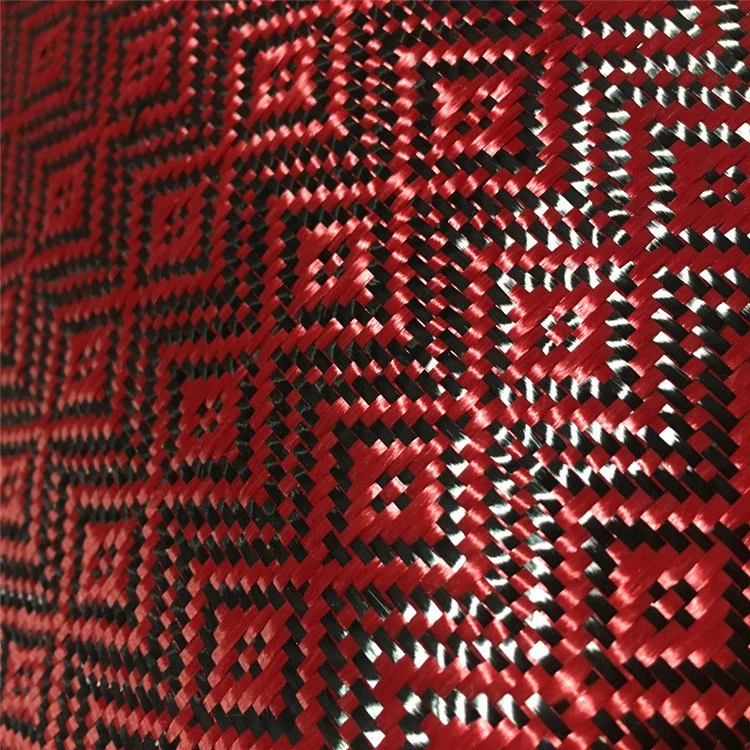
In practical terms, this low thermal conductivity makes Kevlar fiber fabric a great choice for applications where heat insulation is important. For example, in the aerospace industry, it can be used to line the interiors of planes. It helps keep the cabin temperature stable by preventing the transfer of heat from the outside (where it can get really hot or cold at high altitudes) to the inside.
Another area where this property shines is in protective clothing. Firefighters' suits often incorporate Kevlar because it can resist high temperatures and prevent heat from reaching the wearer's body too quickly. It gives them that extra time and protection they need in dangerous situations.
Now, let's get a bit more technical. The thermal conductivity of Kevlar fiber fabric can vary depending on a few factors. One of the main factors is the density of the fabric. A denser fabric will generally have a slightly higher thermal conductivity because there are more fibers in a given volume, providing more pathways for heat to travel. The orientation of the fibers also matters. If the fibers are aligned in a particular direction, heat can transfer more easily along that direction compared to across the fibers.
Moisture content can also affect thermal conductivity. When Kevlar fabric absorbs moisture, the water molecules can act as additional heat carriers. This can increase the overall thermal conductivity of the fabric. So, in environments where the fabric might get wet, it's important to take this into account.
As a supplier, I offer a range of Kevlar fiber fabric products. For instance, we have the Bulletproof Aramid Fiber Cloth. This is a high - strength fabric that's not only great for bullet - resistance but also has good thermal insulation properties. It's been tested in various real - world scenarios and has proven to be reliable.
Our Yellow Aramid Fiber Fabric is another popular option. It has a unique blend of properties, including good thermal insulation and high tensile strength. It can be used in a variety of applications, from industrial machinery covers to protective gear.
And then there's the Twill Aramid Fiber Fabric. The twill weave gives it a distinct look and feel, and it also has its own set of thermal conductivity characteristics. It's often used in applications where a combination of flexibility and heat resistance is required.
If you're in the market for Kevlar fiber fabric, whether it's for a large - scale industrial project or a small - scale DIY application, I'd love to talk to you. The low thermal conductivity of our Kevlar fiber fabric can bring a lot of benefits to your projects. Whether you need to insulate a piece of equipment, protect workers from heat, or enhance the performance of a product, our fabrics can be a great solution.
So, if you're interested in learning more about our products, getting samples, or discussing your specific requirements, don't hesitate to reach out. We can work together to find the perfect Kevlar fiber fabric for your needs. Whether you're an engineer looking for a high - performance material or a manufacturer in need of reliable supplies, we're here to help.
In conclusion, the thermal conductivity of Kevlar fiber fabric is an important property that makes it a versatile and valuable material. Its low thermal conductivity, thanks to its molecular structure and other factors, opens up a wide range of applications in different industries. And as a supplier, I'm excited to offer high - quality Kevlar fiber fabric products that can meet your specific needs.
References
- "Introduction to Polymer Science" by Billmeyer, F. W.
- "Advanced Fibers and Composites" research papers from industry journals.